Industrial rubber wheels can pass a report and still fail early if the test conditions do not match the real equipment. That creates downtime, replacement cost, and difficult supplier conversations. I always start by connecting tests to load, speed, duty cycle, surface condition, and failure risk before I recommend a test plan.
Industrial rubber wheels usually require tests for rubber properties, dimensions, runout, hub construction, rubber-to-hub bonding, load capacity, impact resistance, rolling fatigue, wear resistance, rolling resistance, traction, heat build-up, and environment exposure. The exact test list should be selected according to the wheel’s application, load, speed, operating frequency, and continuous working time.
Many buyers ask me, “Can you provide the required test report?” My answer is usually, “Yes, but first let us define what the wheel must survive.” A report title alone does not reduce risk. A test that reflects the real operating environment does.
Which Tests Are Essential for Every Industrial Rubber Wheel?
A rubber wheel can look correct on paper, but weak testing can hide serious risk1. If a buyer only checks price, hardness, and diameter, problems may appear later as cracking, peeling, vibration, or fast wear. I prefer to begin with a core test set that protects purchasing decisions.
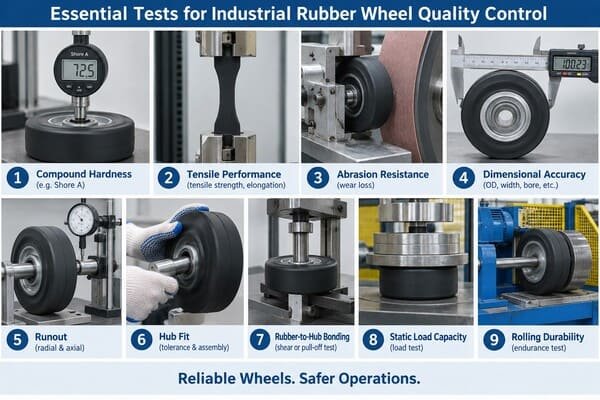
Every industrial rubber wheel should usually be checked for compound hardness, tensile performance, abrasion resistance, dimensional accuracy, runout, hub fit, rubber-to-hub bonding, static load capacity, and basic rolling durability. These tests confirm whether the wheel is made consistently and whether it can handle the intended duty cycle.
Start With Failure Risks, Not Report Titles
In my daily inquiries for rubber wheels and rollers, buyers often send a short message like: “Please quote with test report.” That request is reasonable, but it is not complete. A test report is useful only when its test conditions are close to the buyer’s actual working conditions.
For logistics carts, warehouse trolleys, forklifts, AGVs, conveyor systems, and industrial handling equipment, I normally ask for four inputs first:
- Load per wheel
- Running speed
- Usage frequency
- Continuous working duration
These four details change the test priority. A wheel carrying a heavy static load for long periods may need better compression deformation control2. A wheel running continuously on an AGV may need rolling fatigue, heat build-up, and wear testing. A forklift support wheel may need stronger tear resistance, bonding strength, and impact resistance.
A Practical Core Test Matrix
| Test Area | What It Controls | Common Buyer Risk |
|---|---|---|
| Rubber hardness | Elasticity and load response | Too soft, too hard, poor grip |
| Abrasion resistance | Wear life | Premature replacement |
| Compression set/deformation | Shape recovery under load | Flat spots, vibration |
| Dimensional inspection | Fit and assembly | Installation failure |
| Runout inspection | Smooth rotation | Noise, vibration |
| Bond strength | Rubber-to-core integrity | Peeling or delamination |
| Static load test | Load-bearing ability | Collapse or deformation |
| Dynamic durability | Rolling fatigue | Cracking, heat, failure |
I do not treat this table as a universal mandatory checklist. I treat it as a starting point for risk discussion.
Why Procurement Should Care
A procurement team does not buy test reports. It buys confidence that the wheel will survive the work. That confidence comes from matching the test plan to real duty conditions. For a standard trolley wheel, a basic test package may be enough. For a customized AGV wheel, I would recommend deeper evaluation, sample trials, and clear acceptance criteria before mass production.
Which Rubber Compound Properties Should Be Verified for Industrial Rubber Wheels?
A wheel’s performance starts with the rubber compound. If the compound is wrong, even a precise mold and strong hub cannot save the product. Poor material selection can cause fast wear, poor grip, cracking, oil swelling, or high rolling resistance.
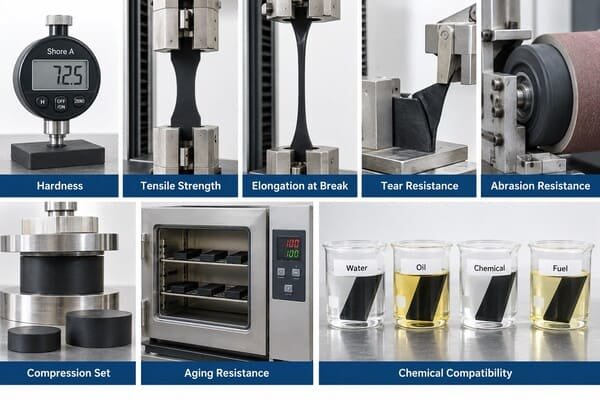
For industrial rubber wheels, buyers should verify hardness, tensile strength, elongation, tear resistance, abrasion resistance, compression set, aging resistance, and chemical compatibility when relevant.3 These properties show whether the rubber compound can support load, recover shape, resist wear, and survive the operating environment.
Hardness Is Important, But It Is Not Enough
Hardness is often the first value buyers request. It is usually measured in Shore A for many rubber wheel applications. A common industrial range may be around 60–95 Shore A, depending on load, traction, noise, and surface protection requirements. However, hardness alone does not prove durability.
Two rubber compounds can both measure 80 Shore A, but one may have better abrasion resistance, while the other may crack faster under repeated loading. That is why I never recommend selecting industrial rubber wheels by hardness only.
Key Rubber Properties to Check
| Property | Why It Matters | Typical Concern |
|---|---|---|
| Hardness | Controls stiffness, grip, and rolling feel | Too soft or too hard |
| Tensile strength | Indicates resistance to pulling stress | Cracking or tearing |
| Elongation at break | Shows flexibility before failure | Brittle rubber |
| Tear resistance | Important for rough floors and edges | Chunking or cuts |
| Abrasion resistance | Predicts wear under friction | Short service life |
| Compression set | Measures recovery after compression | Flat spots |
| Aging resistance | Checks heat/ozone/time effects | Surface cracking |
| Oil/chemical resistance | Needed for oily or chemical floors | Swelling, softening |
Match Compound to Application
Different equipment needs different rubber behavior.
- Warehouse carts often need quiet rolling, floor protection, and moderate wear resistance.
- Forklift wheels need higher load capacity, strong tear resistance, and excellent bonding.
- AGV wheels need stable rolling performance, fatigue resistance, and controlled heat build-up.
- Outdoor logistics wheels may need better ozone, UV, and weathering resistance.
- Food or medical equipment wheels may require specific material compliance documents, which buyers should verify with qualified laboratories or certification bodies.
Common Rubber Options
| Material | Strengths | Limitations |
|---|---|---|
| Natural Rubber (NR) | High elasticity, good tear resistance | Poor oil and ozone resistance |
| SBR | Cost-effective, general wear use | Limited oil resistance |
| NBR | Good oil resistance | Lower ozone resistance unless formulated |
| EPDM | Good weather, ozone, and heat resistance | Poor oil resistance |
| Polyurethane-like elastomers | Excellent wear and load capacity in some designs | Different processing and cost profile |
As a rubber wheel supplier, I can discuss likely material directions based on the application. However, for safety-critical or regulated applications, I always recommend qualified professional evaluation and sample validation under real or simulated working conditions.
How Are Dimensions, Runout, and Wheel Construction Inspected for Industrial Rubber Wheels?
A rubber wheel may use a good compound, but poor dimensional control can still cause assembly trouble. A small bore error, uneven tread, or excessive runout can create vibration, noise, bearing stress, or unstable movement. These problems are costly when they appear after shipment.
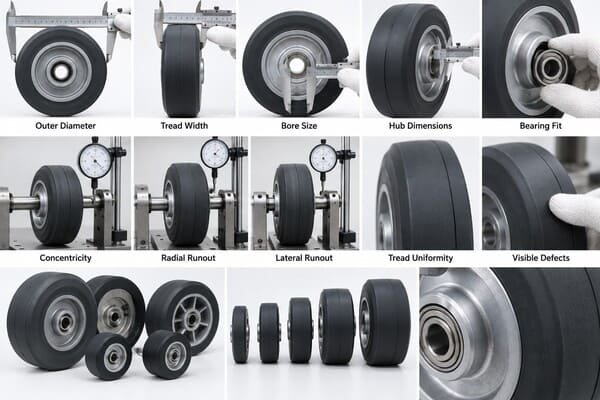
Industrial rubber wheels should be inspected for outer diameter, tread width, bore size, hub dimensions, bearing fit, concentricity, radial runout, lateral runout, tread uniformity, and visible construction defects. These checks confirm that the wheel can assemble correctly and rotate smoothly.
Dimensional Inspection Protects Assembly
For B2B buyers, dimensions are not cosmetic details. They decide whether the wheel fits the equipment. I have seen inquiries where the buyer focused on material first, but the real issue was the hub tolerance because the wheel had to fit an existing axle and bracket.
Important dimensions usually include:
- Outer diameter
- Tread width
- Hub width
- Bore diameter
- Bearing seat dimensions
- Keyway or mounting details
- Rubber thickness
- Chamfer or edge profile
- Metal/plastic core dimensions
For custom industrial rubber wheels, I prefer to confirm drawings before sampling. A 2D drawing is useful, but a 3D file or physical sample can reduce misunderstanding. If the wheel includes a metal hub, bearing, insert, or bonded core, the construction must be clearly defined.
Runout Controls Smooth Movement
Runout describes how much the wheel deviates during rotation. Too much runout can cause:
- Vibration
- Noise
- Uneven wear
- Poor tracking
- Higher rolling resistance
- Bearing stress
- Unstable AGV movement
Radial runout affects up-and-down movement. Lateral runout affects side-to-side wobble. For precision applications, the acceptable runout should be specified in the drawing or purchase standard.
Visual and Structural Checks
A wheel inspection should also include visible quality checks. These may seem basic, but they prevent many disputes.
Common defects include:
- Air bubbles
- Cracks
- Poor rubber flow
- Exposed hub
- Uneven tread
- Flash beyond agreed limits
- Surface contamination
- Off-center molding
- Loose bearings
- Poor bonding line appearance
Example Inspection Plan
| Inspection Item | Tool or Method | Purpose |
|---|---|---|
| OD and width | Caliper, gauge | Confirms fit and rolling height |
| Bore size | Pin gauge, caliper | Confirms axle fit |
| Bearing seat | Gauge | Prevents loose or tight assembly |
| Radial runout | Dial indicator | Controls vibration |
| Lateral runout | Dial indicator | Controls wobble |
| Surface check | Visual inspection | Finds molding defects |
| Hub alignment | Fixture or gauge | Confirms construction accuracy |
A clear drawing with tolerances is better than a general sentence like “standard tolerance.” If the buyer has a critical assembly point, I want that point marked clearly before tooling and sampling.
How Is Rubber-to-Hub Bond Strength Tested for Industrial Rubber Wheels?
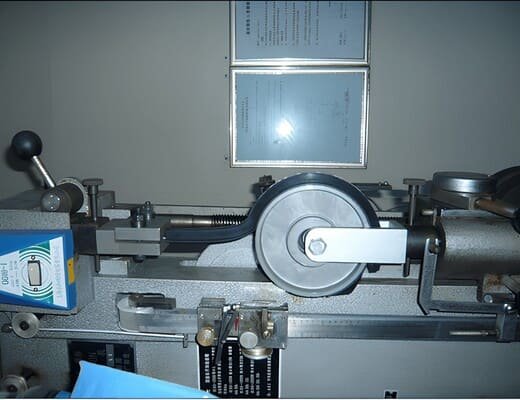
Rubber-to-hub bonding is a serious risk area for wheels with metal, aluminum, plastic, or nylon cores. A wheel may pass basic appearance inspection but fail later if the rubber separates from the hub under load4, impact, or heat.
Rubber-to-hub bond strength is usually evaluated through peel, pull, shear, or destructive separation tests, depending on wheel construction. The goal is to confirm that the rubber layer stays attached to the core during load, rolling, braking, turning, and impact conditions.
Why Bonding Failure Is So Serious
When bonding fails, the wheel may not simply wear out. It may suddenly lose function. The tread can slip, peel, crack around the hub, or separate during operation. For forklifts, AGVs, conveyor rollers, and heavy logistics equipment, that failure can stop production or damage nearby parts.
Bonding depends on several factors:
- Hub material
- Surface preparation
- Adhesive system
- Rubber compound
- Molding temperature
- Curing time
- Pressure during molding
- Contamination control
- Storage conditions before molding
I always treat bonding as a process control issue, not just a final inspection issue.
Common Bond Test Concepts
Different labs and factories may use different fixtures, but the logic is similar.
| Test Type | What It Checks | Best Used For |
|---|---|---|
| Peel test | Resistance to rubber peeling from hub | Bonded tread or strip designs |
| Pull-off test | Separation force from core | Certain molded structures |
| Shear test | Resistance to sliding failure | Loaded wheels and rollers |
| Destructive cut test | Failure mode observation | Process validation |
| Torque/slip test | Tread movement on hub | Driven wheels or braked wheels |
A good bonding result should consider not only the force value, but also the failure mode. In many cases, cohesive rubber tearing can be more favorable than clean adhesive separation, because it suggests the bond is stronger than the rubber itself. However, the correct interpretation depends on the wheel design and test method.
Process Controls Buyers Should Ask About
Procurement teams can reduce risk by asking suppliers practical questions:
- How is the hub surface cleaned before bonding?
- Is blasting, roughening, or chemical treatment used?
- How is adhesive applied and dried?
- How is contamination prevented?
- Are bonding parameters recorded during production?
- Is destructive testing done during sample approval or batch inspection?
- What is the agreed acceptance criterion?
Bonding Test Conditions Matter
A room-temperature peel test may not reflect a hot warehouse, oily floor, high-speed AGV, or frequent braking condition. If the wheel faces heat, oil, coolant, outdoor exposure, or continuous rolling, the bond test plan may need aging or environmental conditioning before testing5.
For important projects, I prefer a two-step approach:
- Lab or factory bonding test to confirm basic construction.
- Application trial on the buyer’s equipment to confirm real-world behavior.
That approach is slower than asking for one report, but it gives much better purchasing confidence.
How Are Static Load, Impact, and Dynamic Durability Evaluated for Industrial Rubber Wheels?
A wheel may look strong when it is new, but load and impact reveal weaknesses quickly. If the selected wheel cannot handle the real duty cycle, the buyer may see flat spots, cracks, bearing damage, hub deformation, or tread separation.
Industrial rubber wheels are evaluated through static load tests, compression deformation checks, impact tests, and dynamic rolling durability tests. These tests show whether the wheel can carry weight, absorb shock, recover shape, and survive repeated movement under realistic load and speed conditions.
Static Load Is the First Filter
Static load testing checks whether a wheel can carry a defined weight without excessive deformation or damage. It is especially important for equipment that sits loaded for long periods, such as carts, racks, mobile platforms, or parked handling equipment.6
When discussing load capacity, buyers should clarify:
- Total equipment weight
- Maximum cargo weight
- Number of wheels sharing the load
- Uneven load distribution
- Safety factor
- Parking time under load
- Floor condition
- Temperature during use
A simple calculation may divide total weight by four wheels, but real loading is often uneven. During turning, acceleration, braking, or floor transitions, one wheel may carry more than its “average” share.
Compression Deformation and Flat Spots
Rubber can deform under load. Some deformation is normal. The concern is whether the wheel recovers after unloading. Poor recovery can cause flat spots, vibration, and unstable travel.
Compression-related checks can include:
- Compression set of rubber material
- Wheel deflection under load
- Permanent deformation after static loading
- Recovery time after unloading
- Visual cracking after load exposure
For warehouse and AGV applications, I pay close attention to continuous working time. A wheel that performs well for short movement may heat up or deform when used for long shifts.
Impact Testing
Impact tests simulate shocks from floor gaps, thresholds, debris, or sudden drops. This matters for logistics and industrial equipment because perfect floors are rare.
Impact risk increases when:
- The load is heavy.
- The speed is high.
- The floor has joints or uneven sections.
- The wheel has a thin rubber layer.
- The hub is rigid.
- The equipment turns sharply.
Dynamic Durability and Rolling Fatigue
Dynamic durability tests are among the most useful tests for industrial rubber wheels.7 They check repeated rolling under load, often for a defined distance, cycle count, speed, or time. The purpose is to see whether the wheel develops cracking, excessive wear, heat, deformation, or bond failure.
Important test parameters include:
| Parameter | Why It Matters |
|---|---|
| Test load | Must reflect actual or worst-case load |
| Speed | Affects heat and fatigue |
| Running time | Shows continuous duty risk |
| Cycle count or distance | Represents service life target |
| Surface material | Influences wear and heat |
| Turning condition | Adds shear stress |
| Stop-start frequency | Simulates real equipment use |
I always ask buyers not to approve dynamic tests based only on a report name. The values inside the report matter more than the title.
How Are Rolling Resistance, Traction, and Heat Build-Up Measured for Industrial Rubber Wheels?
A wheel does not only need to survive. It also needs to move efficiently and safely. High rolling resistance wastes energy. Poor traction causes slipping. Excess heat can accelerate rubber aging, bonding failure, or deformation.
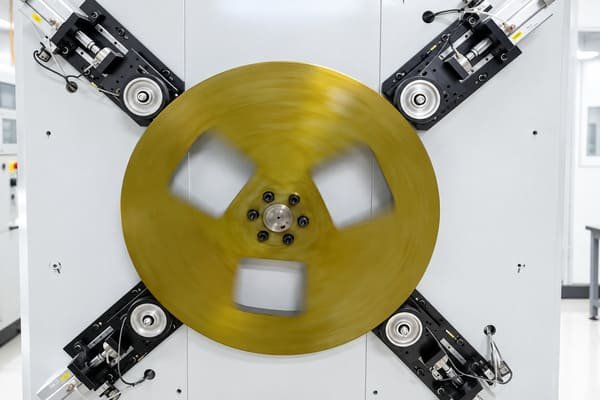
Industrial rubber wheels are tested for rolling resistance by measuring the force or torque needed to keep them moving under load. Traction is evaluated by friction or slip behavior on relevant surfaces. Heat build-up is measured during continuous rolling to assess temperature rise and fatigue risk.
Rolling Resistance Affects Energy Use
Rolling resistance is the force needed to roll the wheel. For manual carts, high rolling resistance makes the cart harder to push. For AGVs and battery-powered equipment, it reduces energy efficiency and operating time.8 For powered equipment, it may increase motor load.
Rolling resistance depends on:
- Rubber hardness
- Rubber hysteresis
- Wheel diameter
- Tread width
- Load
- Bearing quality
- Floor surface
- Temperature
- Speed
- Wheel alignment
A larger wheel often rolls more easily over obstacles, but design space may limit the diameter. A harder compound may reduce rolling resistance, but it can reduce grip or floor protection. This is why material selection is always a balance.
Traction and Slip Control
Traction matters when wheels drive, brake, turn, or climb small slopes. A driven AGV wheel needs enough grip to avoid slipping, but the rubber should not wear too fast or leave heavy marks on the floor.
Traction testing should consider the real surface:
- Smooth concrete
- Epoxy floor
- Tile
- Steel plate
- Wet floor
- Oily floor
- Dusty warehouse floor
If a buyer tells me only “indoor use,” I still ask about the floor. A clean epoxy warehouse and a dusty workshop can require different rubber behavior.
Heat Build-Up Is Often Underestimated
Rubber generates heat when it repeatedly deforms during rolling. This heat build-up9 can become serious during continuous operation. AGVs, conveyor wheels, and high-frequency warehouse equipment are common examples.
Heat build-up can cause:
- Softening of rubber
- Increased wear
- Cracking
- Bond weakening
- Permanent deformation
- Higher rolling resistance
- Shorter service life
A meaningful heat test should define load, speed, running time, ambient temperature, and stopping intervals. For example, a wheel running for 10 minutes in a lab is very different from a wheel running for several hours per shift.
Practical Evaluation Table
| Performance Area | Test Focus | Buyer Decision Supported |
|---|---|---|
| Rolling resistance | Push force or drive torque | Motor sizing, battery life, ease of use |
| Traction | Slip behavior on floor | Safety, braking, drive control |
| Heat build-up | Temperature rise during rolling | Continuous duty suitability |
| Wear after rolling | Tread loss and surface damage | Maintenance cost |
| Noise | Sound during movement | Workplace comfort |
For application-specific decisions, I recommend that engineering teams combine supplier testing with equipment-level trials. The final behavior depends on the whole system, not only the wheel.
Which Environmental and Application-Specific Tests Are Needed for Industrial Rubber Wheels?
Many wheel failures are not caused by load alone. Heat, oil, ozone, water, chemicals, cleaning agents, UV exposure, and floor contamination can change rubber behavior. If these factors are ignored, a good indoor wheel may fail in a harsher environment.
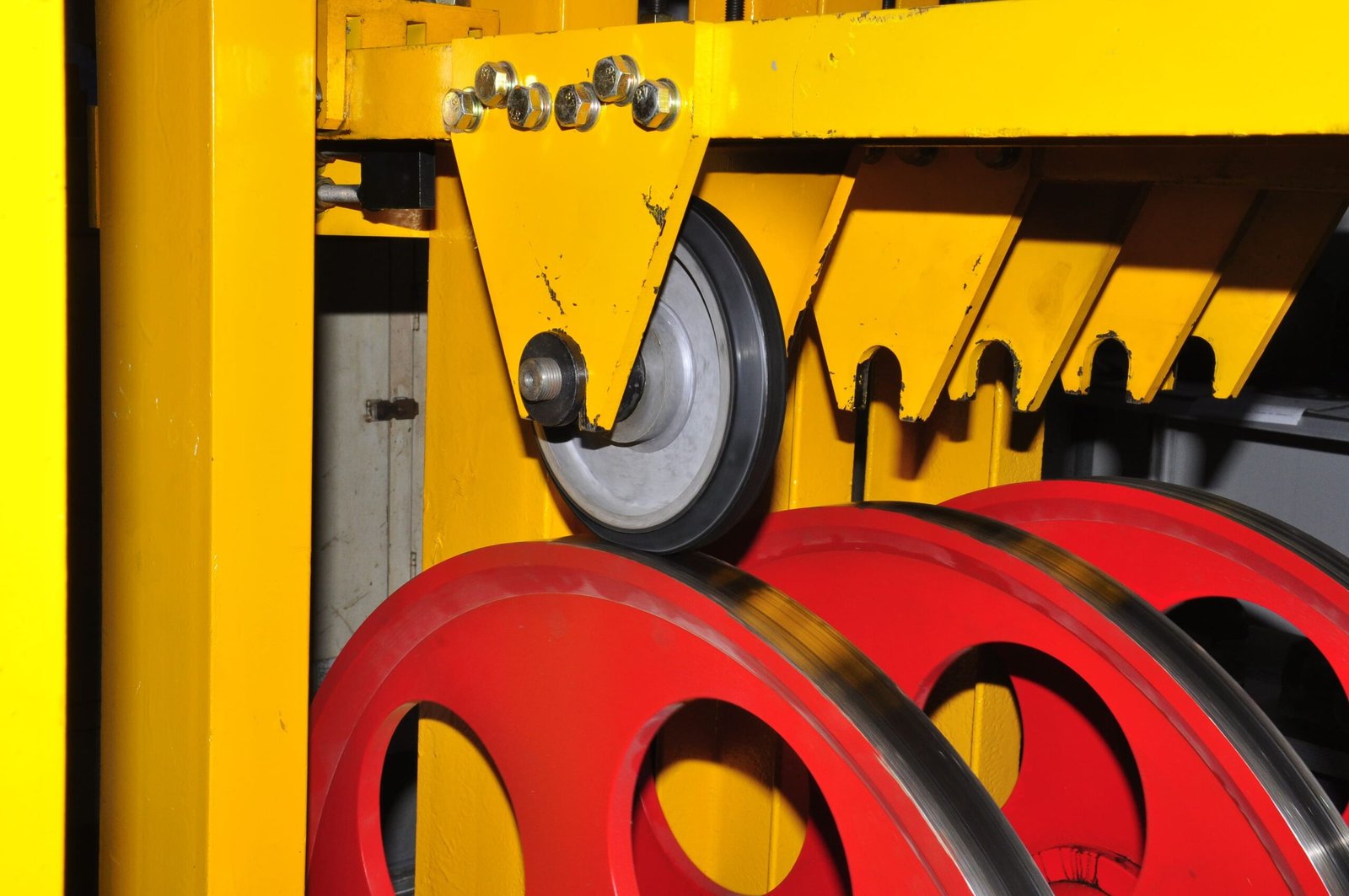
Industrial rubber wheels may need environmental tests10 such as heat aging, ozone resistance, oil resistance, chemical immersion, low-temperature flexibility, water exposure, UV/weathering, and salt spray for metal hubs. The right tests depend on the actual environment and the consequences of failure.
Do Not Test Everything Blindly
It is tempting to request every possible test. However, unnecessary testing adds cost and time without improving the decision. I prefer a focused plan based on exposure risks.
A buyer should describe:
- Indoor or outdoor use
- Normal operating temperature
- Peak temperature
- Contact with oil, grease, coolant, or chemicals
- Cleaning process
- Water exposure
- UV exposure
- Ozone exposure
- Floor type
- Dust or abrasive particles
- Regulatory or industry requirements
Common Environmental Tests
| Exposure | Possible Test Direction | Typical Risk |
|---|---|---|
| Heat | Heat aging | Hardening, cracking, loss of strength |
| Ozone | Ozone resistance | Surface cracks |
| Oil | Oil immersion or volume change | Swelling, softening |
| Chemicals | Chemical compatibility | Degradation |
| Low temperature | Cold flexibility | Brittleness |
| Water | Water resistance | Swelling or corrosion risk |
| UV/outdoor | Weathering test | Cracking, color change |
| Salt or humidity | Corrosion check for hub | Rust, bearing issues |
Application Examples
Logistics and Warehousing
For logistics carts and warehouse equipment, I usually focus on wear resistance, load performance, rolling durability, floor contact, and noise. If the floor is clean and dry, chemical testing may not be necessary. If the floor has oil or cleaning chemicals, compatibility becomes more important.
Forklift and Heavy Handling
Forklift-related rubber wheels or load wheels often need stronger evaluation of load, impact, tear resistance, bonding, and heat build-up. The working load can be high, and the wheels may face sharp turning or repeated floor impacts.
AGV and Automation
AGV wheels often require more attention to rolling resistance, traction, dimensional consistency, runout, and heat build-up. Small changes in wheel diameter, hardness, or grip can affect navigation, battery life, and motion control.
Outdoor Equipment
Outdoor wheels may need weathering, ozone, UV, water, and temperature cycling evaluation. EPDM or other weather-resistant compounds may be considered, but the final choice depends on load, wear, and chemical exposure.
Certificates and Compliance Documents
Some buyers ask for RoHS, REACH, PAHs, or other material compliance documents. These documents can be important, especially for European buyers. However, I always advise buyers to verify certificates, test dates, tested material scope, and issuing laboratory information. A certificate for one material does not automatically cover every customized wheel unless the material and formulation are the same.
How Should Test Standards and Acceptance Criteria Be Specified for Industrial Rubber Wheels?
A vague test request creates vague results. If the buyer only writes “must pass load test,” the supplier and lab may choose conditions that do not reflect the real application. This can lead to disputes even when both sides act in good faith.
For industrial rubber wheels, test standards and acceptance criteria11 should specify the test method, sample size, load, speed, duration, surface, temperature, conditioning, allowable deformation, wear limit, bond strength requirement, visual failure criteria, and reporting format. Clear criteria make test reports useful for procurement decisions.
Use Standards Carefully
Standards are helpful because they create a common language. Depending on the product and market, buyers may reference standards related to rubber testing, castors and wheels, or internal OEM specifications. Examples may include commonly used rubber test methods for hardness, tensile strength, abrasion, compression set, aging, and liquid resistance. For castor and wheel categories, buyers may also review relevant regional or product-specific standards.
However, I avoid saying one standard applies to all industrial rubber wheels. A small trolley wheel, a bonded forklift wheel, and a driven AGV wheel may need different acceptance plans.
What Buyers Should Specify
A strong test requirement should include the following:
- Application description
- Drawing and revision number
- Rubber material or performance target
- Hardness range
- Load per wheel
- Maximum speed
- Continuous operating time
- Duty cycle
- Floor surface
- Temperature range
- Chemical or oil exposure
- Test method or standard
- Sample quantity
- Acceptance limits
- Failure definition
- Report format
- Retest rules
Acceptance Criteria Must Be Measurable
Words like “good,” “strong,” and “durable” are not enough. A better requirement uses measurable limits.
| Weak Requirement | Better Requirement |
|---|---|
| Good hardness | 80 ± 5 Shore A |
| Strong bonding | No rubber-to-hub separation after agreed peel or destructive test |
| Good wear resistance | Abrasion loss below agreed limit under specified method |
| Can carry heavy load | No cracking, hub damage, or permanent deformation beyond agreed limit after defined load and time |
| Smooth rolling | Radial and lateral runout within drawing tolerance |
| Long life | Passes defined rolling test at agreed load, speed, distance, and surface |
Frequently Asked Questions
Is there one mandatory test list for all industrial rubber wheels?
No. There is no single universal test list for all industrial rubber wheels. The required tests depend on load, speed, duty cycle, floor condition, environment, wheel construction, and failure risk. A basic trolley wheel and a driven AGV wheel should not use the same evaluation plan.
What information should I give a rubber wheel supplier before asking for tests?
You should provide load per wheel, speed, operating frequency, continuous working time, floor type, temperature range, chemical exposure, drawing, hub details, and expected service life. These details help the supplier recommend application-matched tests instead of generic reports.
Why is rubber-to-hub bonding important?
Rubber-to-hub bonding prevents the rubber tread from peeling, slipping, or separating from the core. It is especially important for heavy-load, driven, braked, or impact-prone wheels. Buyers should define suitable bond tests and inspect failure mode, not only force values.
Are hardness and abrasion tests enough for procurement approval?
Hardness and abrasion tests are useful, but they are not enough for many industrial applications. Buyers should also consider load capacity, compression deformation, runout, bonding strength, dynamic durability, heat build-up, and environmental resistance when these risks affect the equipment.
Should I rely only on supplier test reports?
No. Supplier reports are helpful, but buyers should verify test conditions and compare them with actual use. For critical applications, I recommend sample testing on the buyer’s equipment, review by qualified engineers, and independent laboratory testing when needed.
Conclusion
Industrial rubber wheels should be tested according to real working conditions, not a fixed checklist copied from another project. The most useful tests connect directly to failure risks: wear, load, compression deformation, rolling fatigue, heat build-up, and rubber-to-hub bonding. If you are evaluating custom rubber wheels for logistics, forklifts, AGVs, or industrial equipment, send me your load, speed, floor, duty cycle, and drawing. I will help you build a practical test and sampling plan.
-
"Federal Research on Recycled Tire Crumb Used …", https://www.epa.gov/chemical-research/federal-research-recycled-tire-crumb-used-playing-fields-and-playgrounds. The source discusses the risks associated with inadequate testing of rubber wheels, highlighting the potential for serious issues to arise despite initial appearances. Evidence role: case_reference; source type: research. Supports: A rubber wheel can look correct on paper, but weak testing can hide serious risk.. Scope note: The evidence illustrates risks but does not provide quantitative data on failure rates or specific case studies. ↩
-
"Static Wheel Load – an overview", https://www.sciencedirect.com/topics/engineering/static-wheel-load. The source provides insights into the specific testing needs based on load conditions, indicating that different applications require tailored testing approaches. Evidence role: mechanism; source type: research. Supports: A wheel carrying a heavy static load for long periods may need better compression deformation control.. Scope note: The evidence is based on expert opinion and may not include quantitative data on performance outcomes under various loads. ↩
-
"MECHANICAL PROPERTIES OF RUBBER", https://ptacts.uspto.gov/ptacts/public-informations/petitions/1549568/download-documents?artifactId=3VpxoVnWA80Bh0UwI-AzTz53LOpYdckLgYuLisWom2zGDJj3Qytl-nM. The properties of rubber compounds, including hardness, tensile strength, and abrasion resistance, are critical for ensuring the performance and durability of industrial rubber wheels, as outlined in various studies and industry standards. Evidence role: definition; source type: paper. Supports: For industrial rubber wheels, buyers should verify hardness, tensile strength, elongation, tear resistance, abrasion resistance, compression set, aging resistance, and chemical compatibility when relevant.. Scope note: The specific values and testing methods may vary based on application and standards. ↩
-
"Case Study: Rubber-to Metal Bonding", https://www.empire-airblast.com/case-studies/case-study-rubber-to-metal-bonding/. The source discusses the critical nature of rubber-to-hub bonding and the potential for failure despite passing initial inspections, highlighting the importance of thorough testing. Evidence role: case_reference; source type: research. Supports: A wheel may pass basic appearance inspection but fail later if the rubber separates from the hub under load.. Scope note: The evidence illustrates the risk of bonding failure but does not provide specific failure rates or case studies. ↩
-
"Rubber Fatigue Revisited: A State-of-the-Art Review … – PMC", https://pmc.ncbi.nlm.nih.gov/articles/PMC11991106/. The source highlights the need for testing conditions that reflect real-world applications, particularly for environments that may affect bond strength. Evidence role: mechanism; source type: research. Supports: If the wheel faces heat, oil, coolant, outdoor exposure, or continuous rolling, the bond test plan may need aging or environmental conditioning before testing.. Scope note: The evidence is based on expert recommendations and may not cover all environmental factors affecting bond strength. ↩
-
"Effects of prolonged load carriage on ground reaction …", https://pubmed.ncbi.nlm.nih.gov/22409169/. Static load testing is crucial for ensuring the safety and performance of equipment that remains loaded for extended periods, as highlighted in various engineering studies and guidelines. Evidence role: expert_consensus; source type: paper. Supports: Static load testing checks whether a wheel can carry a defined weight without excessive deformation or damage.. Scope note: The focus is primarily on static load testing without addressing dynamic conditions. ↩
-
"Evaluating Rubber Aging on Tire Durability", https://ideaexchange.uakron.edu/cgi/viewcontent.cgi?article=2072&context=honors_research_projects. Dynamic durability tests are critical for assessing the performance and longevity of industrial rubber wheels under repeated loading conditions, as highlighted in various engineering studies and standards. Evidence role: expert_consensus; source type: paper. Supports: Dynamic durability tests are among the most useful tests for industrial rubber wheels.. Scope note: The support is general and may not address specific wheel types or applications. ↩
-
"(PDF) Electrical Energy Consumption in Tire Plants", https://www.academia.edu/118023982/Electrical_Energy_Consumption_in_Tire_Plants. High rolling resistance in industrial rubber wheels can significantly impact energy efficiency and operational time for AGVs and battery-powered equipment, as detailed in various studies and reports on wheel performance. Evidence role: statistic; source type: paper. Supports: High rolling resistance in industrial rubber wheels reduces energy efficiency and operating time for AGVs and battery-powered equipment.. Scope note: The evidence may not cover all types of AGVs or battery-powered equipment, focusing instead on general trends in rolling resistance. ↩
-
"Mechanism of Accelerated Deterioration of High-Temperature …", https://pmc.ncbi.nlm.nih.gov/articles/PMC10420937/. Heat build-up in rubber materials during operation is a well-documented phenomenon in materials science, with studies highlighting its effects on performance and longevity. Evidence role: mechanism; source type: paper. Supports: Heat build-up can cause: softening of rubber, increased wear, cracking, bond weakening, permanent deformation, higher rolling resistance, shorter service life.. Scope note: The support may not focus exclusively on wheels but provides context for understanding heat build-up in rubber materials. ↩
-
"ASTM G65", https://en.wikipedia.org/wiki/ASTM_G65. Environmental tests are essential for assessing the performance of materials under various conditions, as supported by research that outlines the effects of environmental factors on material integrity. Evidence role: general_support; source type: paper. Supports: Industrial rubber wheels may need environmental tests such as heat aging, ozone resistance, oil resistance, chemical immersion, low-temperature flexibility, water exposure, UV/weathering, and salt spray for metal hubs.. Scope note: The support may not directly address all types of rubber wheels but provides a general understanding of environmental testing. ↩
-
"the testing of mechanical rubber goods", https://nvlpubs.nist.gov/nistpubs/Legacy/circ/nbscircular38e5.pdf. Test standards and acceptance criteria are critical in ensuring consistent and reliable testing outcomes, as supported by various engineering guidelines and best practices in materials testing. Evidence role: expert_consensus; source type: paper. Supports: Test standards and acceptance criteria should specify the test method, sample size, load, speed, duration, surface, temperature, conditioning, allowable deformation, wear limit, bond strength requirement, visual failure criteria, and reporting format.. Scope note: The support may not focus exclusively on rubber wheels but provides a broader context for understanding testing standards. ↩