Product Overview
Reliable custom rubber parts for industrial applications
Quick Answer
Custom silicone chest percussion cups feature a flexible cup-shaped contact section for controlled manual percussion during chest physiotherapy. Cup diameter, height, rim profile, grip geometry, silicone compound, Shore A hardness, color, surface texture, tolerances, and packaging can be customized for the specified application.
A silicone chest percussion cup is a handheld component used to apply controlled, rhythmic percussion during chest physiotherapy. Its flexible cup-shaped contact area helps distribute impact over the treatment area. Cup diameter, height, contact-rim profile, silicone compound, Shore A hardness, color, and surface finish can be customized according to the intended user and application requirements.
Custom Silicone Chest Percussion Cup for Chest Physiotherapy
A silicone chest percussion cup is a hollow, dome-shaped handheld device used in chest physical therapy (CPT), where a caregiver taps the cupped surface against a patient’s chest or back to create a rhythmic drum-pressure vibration that helps loosen and break up thick mucus or phlegm in the lungs. The cup’s hollow arc design traps air with each tap, producing a hollow, resonant pop rather than a flat slap, which distributes force more evenly and comfortably across the chest wall than percussion performed with a bare cupped hand. This technique is commonly recommended for stroke and hemiplegia patients, long-term bedridden individuals, and people with COPD or difficulty expectorating mucus on their own.
Key Specifications
| Parameter | Typical Range/Option |
|---|---|
| Material | Food-grade or environmentally friendly silicone |
| Shape | Round, hollow arc/dome cup with palm-friendly back |
| Typical Size (Adult) | Approx. 4.3 x 3.5 in (109 x 89mm) |
| Typical Size (Smaller/Pediatric) | Approx. 3.9 x 2.3 in (99 x 58mm) |
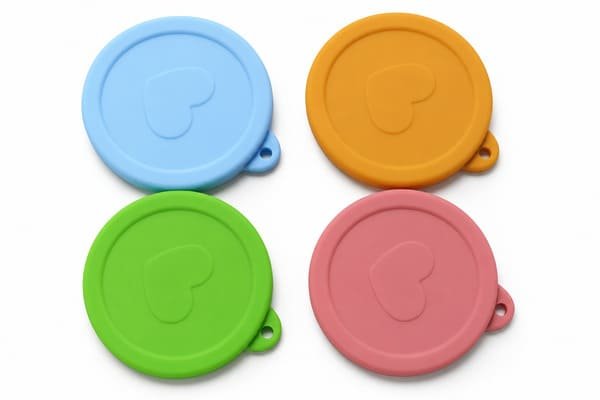
| Color Options | Blue, green, pink, white, and multi-color packs |
| Key Features | High elasticity, non-deforming, heat/cold resistant, odorless, reusable |
| Manual vs. Electric | Manual hand-tapped cups; electric/rechargeable vibrating versions also available (multi-speed) |
| Reusability | Reusable, washable |
What Is a Chest Percussion Cup?
A chest percussion cup replicates the traditional hand-cupping technique used in chest physiotherapy, where a caregiver forms their hand into a cup shape and claps it rhythmically against the patient’s chest or back to help mobilize retained secretions in the lungs. The silicone device stands in for the caregiver’s cupped palm, using its hollow internal cavity to trap and compress air with each tap, generating a deep, muscle-penetrating vibration that helps dislodge mucus so it can move toward the larger airways and be coughed up more easily. This technique, known clinically as percussion, is typically performed for five to seven minutes across different areas of the chest or back as directed by a physician, often combined with postural drainage positioning.
Why Choose a Silicone Percussion Cup Over Manual Cupping
- Consistent, uniform force — the cup’s shape and material distribute tapping pressure evenly, reducing the risk of the uneven or overly hard contact that can occur with an untrained caregiver’s hand.
- Reduced hand fatigue and pain — using a molded cup lessens strain on the caregiver’s palm and wrist during repeated tapping sessions compared to bare-handed percussion.
- Comfortable, ergonomic grip — most designs are shaped to fit naturally in the palm, making extended use more comfortable for caregivers performing therapy regularly.
- Safe and skin-friendly material — food-grade silicone is soft, non-toxic, and gentle against a patient’s skin, especially important for repeated daily use.
- Reusable and easy to clean — unlike disposable aids, the cup can be washed and reused indefinitely, making it a practical long-term therapy tool.
- Available in manual or electric versions — electric, multi-speed vibrating versions offer adjustable intensity for patients needing a gentler or stronger vibration effect.
Manual vs. Electric Percussion Cups
| Feature | Manual Silicone Cup | Electric/Rechargeable Cup |
|---|---|---|
| Power source | None (hand-operated) | Rechargeable battery |
| Vibration control | Determined by caregiver’s tapping force | Multiple gear/speed settings (e.g., 6-speed) |
| Portability | Very lightweight, no charging needed | Slightly bulkier, requires periodic charging |
| Best for | Caregiver-assisted percussion sessions | Patients needing adjustable, consistent vibration intensity |
| Noise level | Depends on tapping technique | Often designed for quiet, low-noise operation |
Common Applications
- Chest physical therapy (CPT) for patients with excessive mucus or difficulty expectorating.
- Stroke and hemiplegia patient care requiring assisted mucus clearance.
- Long-term bedridden patient nursing care to prevent mucus buildup and related complications.
- COPD and chronic lung condition management as a complementary therapy tool.
- General postural drainage therapy sessions performed at home or in clinical settings.
- Muscle pain relief and deep tissue vibration use in some designs, separate from respiratory applications.
How to Use a Chest Percussion Cup
- Position the patient according to the postural drainage position recommended by their doctor for the specific lung area being treated.
- Hold the percussion cup firmly against the palm, sealed side facing the chest or back.
- Tap the cup rhythmically against the target chest or back area, listening for a hollow, popping sound rather than a flat slap.
- Continue percussion for approximately five to seven minutes per chest or back area, or as directed by a healthcare provider.
- Have the patient take a deep breath and cough after each percussion session to help clear loosened mucus.
Custom Manufacturing Options
- Custom cup diameter and depth to accommodate adult or pediatric use cases.
- Custom color batches for branding, clinical packaging, or caregiver identification.
- Custom hardness/firmness tuning to balance comfort against vibration transfer effectiveness.
- Electric/vibrating module integration for adjustable-intensity therapy devices.
- Bulk production runs for medical supply distributors and home healthcare equipment brands, with sample availability prior to full orders.
FAQ
Can the silicone chest percussion cup dimensions be customized?
Yes. The cup opening diameter, overall diameter, height, rim thickness, curvature, and gripping section can be developed for a specified design. Buyers should provide a 2D drawing, 3D model, physical sample, or complete dimensional specification so that tooling, tolerances, and sample requirements can be evaluated.
How should the silicone hardness be selected?
Shore A hardness affects flexibility, deformation, handling, and contact response. Selection should consider the cup geometry, wall thickness, intended user group, percussion method, required grip, and cleaning conditions. The final compound and hardness should be evaluated through samples and application-specific testing before production approval.
Can a skin-contact silicone compound be supplied?
Application-specific silicone compounds and supporting documentation are available upon request. Buyers must identify the intended contact type, contact duration, destination market, cleaning method, required regulations, and testing standards. Suitability and compliance must be confirmed for the selected compound, color, finished product, and intended application.
Can the cup be cleaned or disinfected?
Cleaning and disinfection compatibility depends on the silicone compound, product geometry, cleaning agent, concentration, temperature, exposure time, and number of cycles. Buyers should provide the complete cleaning procedure so that material compatibility and product-design requirements can be reviewed before approval.
Are prototype samples available?
Sample availability depends on the required dimensions, structure, silicone compound, Shore A hardness, color, tooling status, and requested quantity. Prototype evaluation should include dimensions, grip, flexibility, surface condition, cleaning compatibility, and functional performance under the intended method of use.
How are tooling, MOQ, and lead time confirmed?
Tooling, MOQ, and lead time depend on the cup geometry, silicone compound, hardness, color, dimensional tolerances, surface requirements, testing, inspection, packaging, and order quantity. These commercial details are confirmed after reviewing the complete technical specification and estimated annual volume.
Request a Custom Quote
Send your 2D drawing, 3D model, physical sample, or required dimensions for review. Include the silicone compound, Shore A hardness, color, intended user group, flexibility requirements, cleaning procedure, compliance needs, order quantity, and estimated annual volume. Tooling, samples, MOQ, lead time, inspection, and packaging will be confirmed after technical evaluation.