Product Overview
Reliable custom rubber parts for industrial applications
Quick Answer
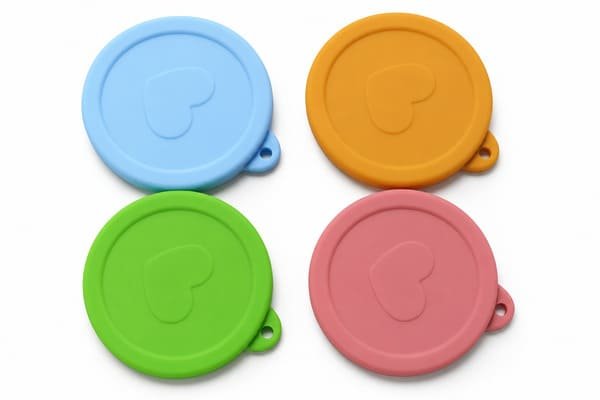
Custom silicone canning jar lids provide flexible coverage for compatible glass jar mouths and rim profiles. Diameter, height, wall thickness, fitting geometry, Shore A hardness, color, texture, tolerances, and packaging can be developed according to the jar design, stored contents, and required closure function.
Silicone canning jar lids are flexible covers developed to fit compatible glass jar mouths and rim profiles. They can help cover stored contents and reduce exposure to dust or external contact when correctly installed. Lid diameter, edge geometry, sealing profile, silicone hardness, color, surface texture, and packaging can be customized for the specified jar.
Custom Silicone Canning Jar Lids for Compatible Jar Closures
Silicone canning jar lids are reusable, food-grade covers designed to create an airtight, leak-proof seal on mason jars, offering an alternative to traditional single-use metal lids or plastic wrap. They come in several formats: flat silicone disc gaskets used with reusable metal bands, all-silicone stretch lids that pull directly over a jar’s mouth, stainless steel lids fitted with a silicone sealing liner, and specialty designs like drinking lids or fermentation airlock lids. Because they’re reusable rather than disposable, silicone lids are popular among home canners, fermenters, and anyone looking to reduce single-use lid waste in food storage.
Key Specifications
| Parameter | Typical Range/Option |
|---|---|
| Material | Food-grade silicone (platinum-cured in premium grades) |
| Common Formats | Disc gasket + metal band, all-silicone stretch lid, steel lid with silicone liner, drinking lid, airlock lid |
| Mouth Compatibility | Regular mouth (~70mm/2.7in) and wide mouth (~86mm/3.3in) mason jars |
| Stretch Lid Range | Often stretches up to approx. 3.5 in to fit various jars and cans |
| Color Options | Clear, multi-color packs, gray, deep blue, and more |
| Reusability | Reusable, dishwasher safe, freezer safe |
| Special Variants | Straw-hole lids, fermentation airlock valve lids, yogurt jar lids with labels |
What Are Silicone Canning Jar Lids?
Silicone canning jar lids replace or supplement the traditional flat metal lid and screw band system used in home canning, offering a reusable sealing surface that presses down against the jar rim to keep contents airtight without requiring a fresh disposable lid each time. Some versions are simple flat silicone discs that sit under a standard metal canning band, directly substituting for the one-time-use metal lid insert, while others are molded entirely from silicone and stretch over the jar’s mouth like a cap, eliminating the need for a separate band altogether. Because the material is flexible and food-safe, these lids can also double as fermentation airlocks, drinking lids, or general food storage covers depending on the specific product design.
Common Format Types
| Format | Description | Best Use Case |
|---|---|---|
| Silicone disc gasket + metal band | Flat reusable disc replaces the metal lid insert, paired with a standard reusable band | Direct alternative to traditional canning lids for regular use |
| All-silicone stretch lid | Stretches directly over jar mouth, no band needed | Everyday food storage, covering jars, cans, and small bowls |
| Steel lid with silicone liner | Rigid stainless steel cap with an integrated silicone seal | Long-term dry goods storage, rust-proof sealing |
| Drinking lid | Silicone lid with a drinking spout, secured by a steel band | Kid-friendly drink jars, on-the-go beverage use |
| Fermentation airlock lid | Silicone lid with a valve to release built-up gas | Vegetable fermentation, brewing |
| Straw-hole lid | Silicone lid with a pre-cut hole for a straw | Smoothies, iced drinks in mason jars |
Why Choose Silicone Over Disposable Metal Lids
- Reusable, reducing waste — unlike single-use metal canning lids that are typically discarded after one seal, silicone lids can be washed and reused across many canning or storage cycles.
- Leak-proof, airtight sealing — silicone’s natural elasticity conforms tightly to the jar rim, helping prevent spills and preserve freshness.
- Rust-free durability — silicone and silicone-lined steel lids avoid the rusting issues that can affect standard metal lids over repeated use or long-term storage.
- Versatile functionality — the same basic lid format can be adapted for drinking, fermentation airlocks, or straw access, extending use well beyond basic food preservation.
- Dishwasher and freezer safe — most silicone lids tolerate both dishwasher cleaning and freezer storage without cracking or losing their seal.
- Universal-ish stretch fit — all-silicone stretch lids can often cover a range of jar, can, and bowl sizes with one product, unlike a lid sized for one specific jar mouth diameter.
Mouth Size Compatibility Guide
| Mason Jar Type | Approx. Mouth Diameter | Common Lid Format |
|---|---|---|
| Regular mouth | ~70mm (2.7 in) | Disc gasket + band, steel lid with liner, drinking lid |
| Wide mouth | ~86mm (3.3 in) | Disc gasket + band, steel lid with liner, drinking lid |
| Small jars (e.g., yogurt jars, 5-8.5oz) | Varies by brand | All-silicone stretch/snap lid sized to brand-specific jar |
| WECK-style jars | 60mm and 100mm variants | Dedicated silicone lids sized to WECK jar rim profiles |
Always confirm the exact rim diameter of the target jar brand, since “regular” and “wide” mouth sizing can vary slightly between manufacturers like Ball, Kerr, and WECK.
Manufacturing Process
Silicone canning jar lids are produced using compression molding or liquid silicone injection molding, where food-grade or platinum-cured silicone is cured into a disc, cap, or lined-lid shape with dimensions matched precisely to standard regular or wide mouth jar rim profiles. Manufacturers targeting food-contact compliance select platinum-cured silicone formulations specifically to minimize leachable by-products and ensure the lid is safe for repeated direct food contact. Specialty variants, such as airlock or drinking lids, incorporate additional molded features like valves or spouts during the same molding process.
Common Applications
- Home canning and food preservation as a reusable alternative to disposable metal lid inserts.
- Everyday food storage, sealing jars, cans, and small bowls to replace single-use plastic wrap.
- Vegetable fermentation and home brewing using airlock-style silicone lids.
- On-the-go beverage storage using drinking lids with steel securing bands.
- Small specialty jar reuse, such as converting yogurt jars into reusable snack or tea storage containers.
FAQ
Can silicone canning jar lids be customized for different jar sizes?
Yes. The overall diameter, internal fitting diameter, height, wall thickness, edge profile, retaining features, and pull-tab geometry can be customized. Buyers should provide a jar drawing, 3D model, verified rim dimensions, physical jar, or existing lid sample to confirm the required fit.
Are these lids suitable for food contact?
Food-contact suitability depends on the selected silicone compound, color system, manufacturing conditions, destination market, intended food, contact temperature, and exposure duration. Applicable material options and supporting documentation are available upon request. Compliance must be confirmed for the finished product and intended conditions of use.
Can silicone jar lids be used for pressure or water-bath canning?
This capability should not be assumed. Thermal canning requires a validated combination of jar, closure, processing temperature, pressure, sealing method, and food-preservation procedure. Buyers must provide the complete processing conditions and applicable standards so that material and design requirements can be reviewed separately.
How should the silicone hardness be selected?
Shore A hardness affects flexibility, installation force, rim contact, retention, and removal. The appropriate hardness depends on the lid dimensions, wall thickness, fitting profile, jar tolerances, required sealing function, and operating temperature. Samples should be tested on the actual jar before production approval.
Are prototype samples available for fit testing?
Sample availability depends on the lid dimensions, silicone compound, hardness, color, tooling requirements, and requested quantity. Sample evaluation should include installation, retention, removal, dimensional fit, surface condition, cleaning compatibility, and sealing performance under the specified application conditions.
How are tooling, MOQ, and lead time confirmed?
Tooling, MOQ, and lead time depend on the lid geometry, silicone compound, hardness, color, surface texture, dimensional tolerances, testing requirements, inspection criteria, packaging, and order quantity. These details are confirmed after reviewing the jar interface, complete specification, and estimated annual volume.
Request a Custom Quote
Send your 2D drawing, 3D model, physical jar, existing lid sample, or verified jar dimensions for review. Include the silicone requirements, Shore A hardness, color, stored contents, operating temperature, closure function, cleaning process, compliance needs, required quantity, and estimated annual volume. Tooling, samples, MOQ, lead time, inspection, and packaging will be confirmed after evaluation.