Product Overview
Reliable custom rubber parts for industrial applications
Quick Answer
Custom medical silicone components in clear, translucent, and white forms, including rings, discs, plugs, covers, connectors, and interface parts. Dimensions, silicone grade, Shore A hardness, tooling, samples, cleanliness requirements, and compliance documentation can be evaluated for each intended device application.
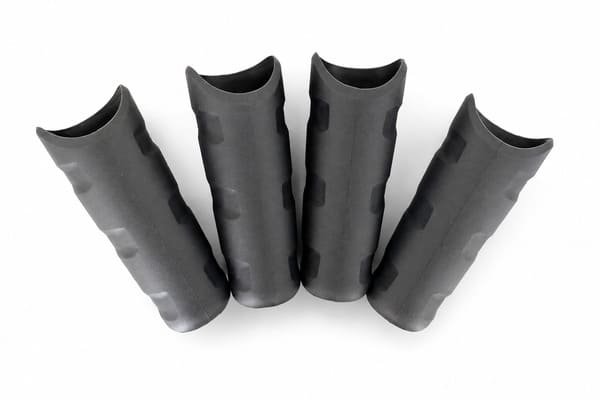
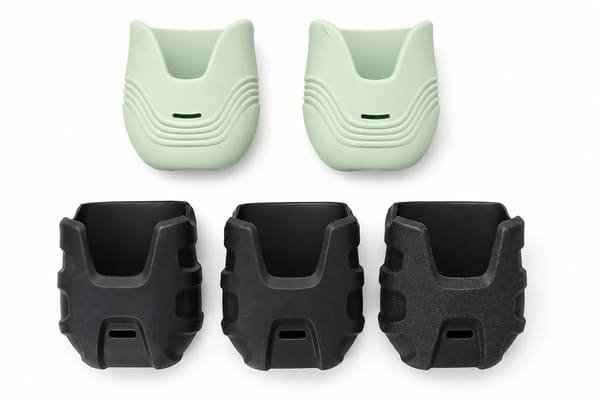
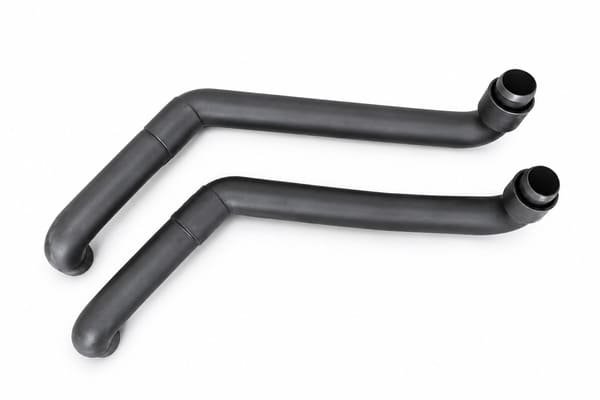
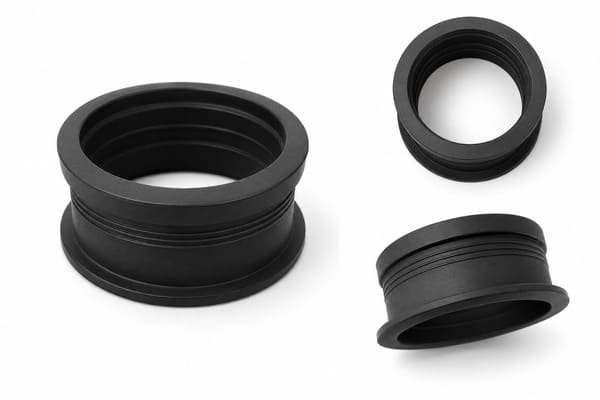
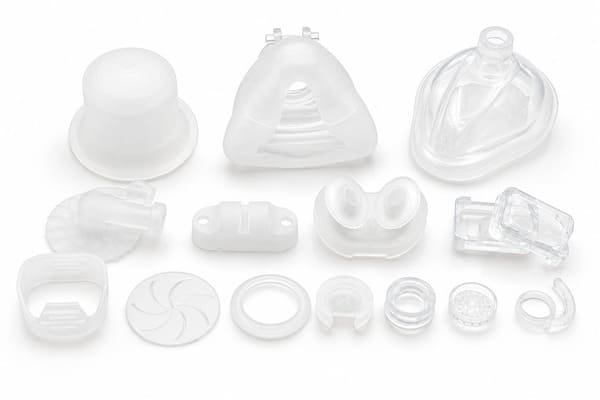
This medical silicone components assortment includes clear, translucent, and white molded parts in multiple shapes for medical device and healthcare equipment applications. The collection includes interface covers, rings, discs, plugs, connectors, and other formed components. Exact dimensions, silicone grades, Shore A hardness, and compliance requirements are available upon request.
Medical Silicone Components Assortment
A comprehensive range of custom-molded medical-grade silicone components, including mask cushions, respiratory nosepieces, sealing rings, valves, and precision gaskets, engineered from liquid silicone rubber or high consistency rubber for biocompatible, patient-contact healthcare applications.
Product Overview
This assortment showcases translucent medical silicone parts spanning a wide range of geometries, from large soft-touch mask cushions and nasal pillow interfaces to small precision rings, valve components, and connector housings. These components are typically produced for respiratory therapy devices such as CPAP masks, along with broader medical device applications requiring flexible, biocompatible sealing and cushioning elements. The clear, semi-transparent finish shown across these parts is characteristic of medical-grade silicone formulated for direct or prolonged skin and airway contact.
Key Material Properties
| Property | Detail |
|---|---|
| Material Type | Liquid silicone rubber or high consistency rubber |
| Biocompatibility | Naturally inert, hypoallergenic, nontoxic; meets FDA and ISO regulatory standards |
| Temperature Range | Flexible down to approximately negative 60 degrees Fahrenheit, stable up to approximately 400 degrees Fahrenheit depending on grade |
| Hardness Range | Commonly available in 30, 40, 50, 60, and 70 durometer grades |
| Chemical Resistance | Strong resistance to bodily fluids and sterilization chemicals |
| Clarity | High optical clarity available for visual inspection or aesthetic applications |
Why LSR and HCR Dominate Medical Silicone Manufacturing
Liquid silicone rubber is favored for precision medical components because it cures through heat-activated chemical cross-linking rather than simple cooling, producing consistently uniform parts with fine surface detail straight out of the mold. This process supports tight tolerances and repeatable geometry across high-volume production runs, which is critical for components like mask cushions and valves that must maintain a reliable seal against skin or mating hardware every time. For larger components like the mask cushion and nosepiece shapes seen in this assortment, LSR’s flexibility and elastic recovery allow the silicone to conform to varied facial contours while returning to its molded shape after each use.
Common Component Types in Medical Silicone Assortments
- Full-face and nasal mask cushions that form a soft, conformable seal against the skin in respiratory therapy devices such as CPAP machines.
- Nasal pillow and nosepiece interfaces designed to interface directly with the nostrils in minimal-contact respiratory mask designs.
- Sealing rings, gaskets, and O-ring style components used to maintain airtight or fluid-tight barriers in surgical tools and diagnostic equipment.
- Valve components for respiratory and infusion devices, controlling airflow or fluid direction within a connected system.
- Connector housings and swivel port components that link flexible tubing to rigid device frames, often requiring ultrasonic welding or adhesive bonding during final assembly.
- Textured or ribbed structural elements, similar to the fan-shaped and dual-lobed pieces shown in this assortment, likely serving as internal baffles, diffusers, or mechanical connectors within a larger device housing.
Manufacturing Process Overview
Medical silicone components typically begin as precision-machined steel or aluminum molds created from approved CAD designs, with mold surfaces finished to a high smoothness standard to ensure the resulting silicone parts have equally smooth, defect-free surfaces. During LSR injection molding, two liquid components, a platinum-catalyzed base and a cross-linker-containing counterpart, are metered in a precise ratio and injected into a heated mold cavity, where the mixture cures rapidly through chemical cross-linking rather than physical cooling. Each production batch undergoes quality inspection for defects such as bubbles, warping, or incomplete fills before parts move to assembly, where components like cushions, frames, and valves are integrated using ultrasonic welding or medical-grade adhesives to form complete, airtight assemblies.
Regulatory and Quality Standards
Medical-grade silicone used in these components must comply with stringent FDA and ISO regulatory standards, reflecting the material’s direct or prolonged contact with skin, airways, or bodily fluids. Many manufacturers producing this type of assortment operate under ISO 13485 certified quality systems within environmentally controlled cleanroom conditions, such as Class 8 cleanrooms, to minimize contamination risk during production. Depending on intended use, some silicone formulations within this category may also meet implantable-grade requirements for either short-term applications up to 29 days or long-term and permanent implantable use.
Common Applications
- Respiratory therapy devices, including CPAP and BiPAP mask cushions, nasal pillows, and headgear connection points.
- Surgical and diagnostic tool sealing components, including gaskets and O-rings maintaining fluid or airtight barriers.
- Infusion and fluid management device valves and seals requiring chemical resistance and repeated flex durability.
- Wearable health device components such as sensor housings and flexible bands benefiting from silicone’s skin-safe, hypoallergenic properties.
- IV and drainage line tubing and connector components requiring flexibility, clarity, and resistance to repeated sterilization cycles.
Frequently Asked Questions
Are all components in this assortment made from the same silicone grade?
The assortment is identified as silicone components, but a specific compound grade has not been confirmed for each part. Different applications may require different hardness, transparency, curing systems, contact properties, sterilization compatibility, or documentation. The exact silicone specification should be selected and approved separately for each component.
Are these components certified for medical use?
No specific certification or completed compliance testing has been provided. A silicone component should not be considered medically approved based only on its material name or appearance. Required biological evaluation, material documentation, cleanliness controls, sterilization validation, and regulatory requirements must be defined for the intended device and target market.
Can the dimensions and shapes be customized?
Yes. Overall dimensions, wall thickness, openings, rings, flanges, grooves, internal profiles, connector features, and sealing surfaces can be evaluated for customization. A 2D drawing, 3D model, physical sample, or complete mating-component specification is required to assess tooling and manufacturing feasibility.
Which Shore A hardness should be selected?
The required hardness depends on the component function, installation method, deformation, sealing requirement, removal force, mechanical load, and mating surfaces. No hardness value should be selected from the photograph alone. Provide the application conditions and required functional behavior so the appropriate hardness range can be evaluated.
Can the silicone components be sterilized?
Sterilization compatibility has not been confirmed for the pictured components. The buyer should identify the sterilization method, process temperature, exposure duration, number of cycles, cleaning chemicals, and acceptance criteria. The selected silicone compound and finished component must then be evaluated under the specified process conditions.
Are prototype samples, tooling, MOQ, and lead time available?
Prototype samples, tooling, MOQ, and lead time are available upon request. They depend on the selected component geometry, silicone grade, hardness, tolerances, molding process, cleanliness requirements, inspection plan, compliance documentation, packaging, order quantity, and estimated annual volume.
Request Product Evaluation
Provide the required component design, dimensions, silicone specification, Shore A hardness, intended device function, contact conditions, cleaning or sterilization method, compliance requirements, quantity, and estimated annual volume. Technical data, 3D models, 2D drawings, or physical samples will support evaluation of material selection, tooling, prototypes, inspection, and packaging.