Product Overview
Reliable custom rubber parts for industrial applications
Quick Answer
Rubber waterstop profiles for concrete construction and expansion joints, available in 80, 100, 110, and 120 mm widths. Material options include SBR, neoprene rubber, natural rubber, and EPDM. Flat ribbed, center-bulb, tubular-center, and multi-cavity cross-sections can be customized for project requirements.
Rubber waterstops are flexible waterproofing profiles embedded across concrete joints to help prevent water from entering or escaping through a structure. Available in 80, 100, 110, and 120 mm widths, they can use SBR, neoprene rubber, natural rubber, or EPDM and include flat ribbed, center-bulb, tubular-center, and multi-cavity sections.
Product Overview
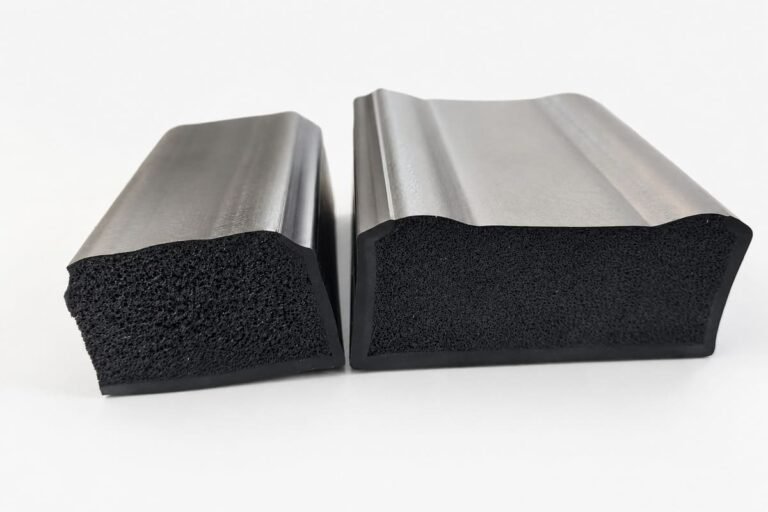
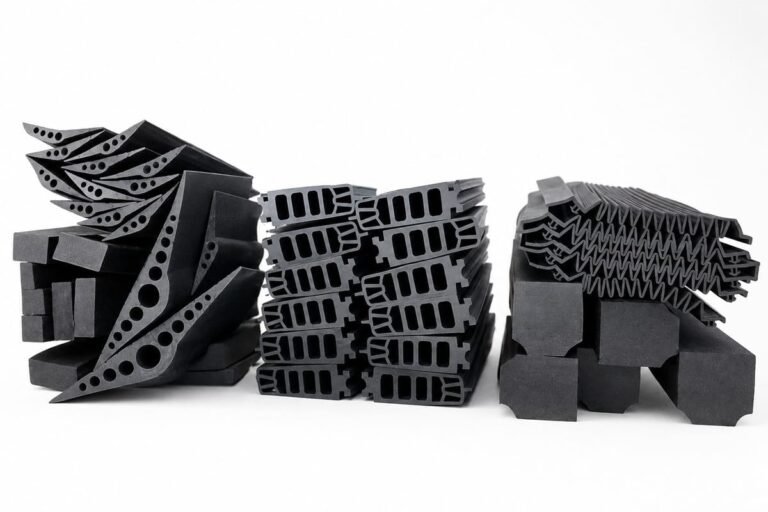
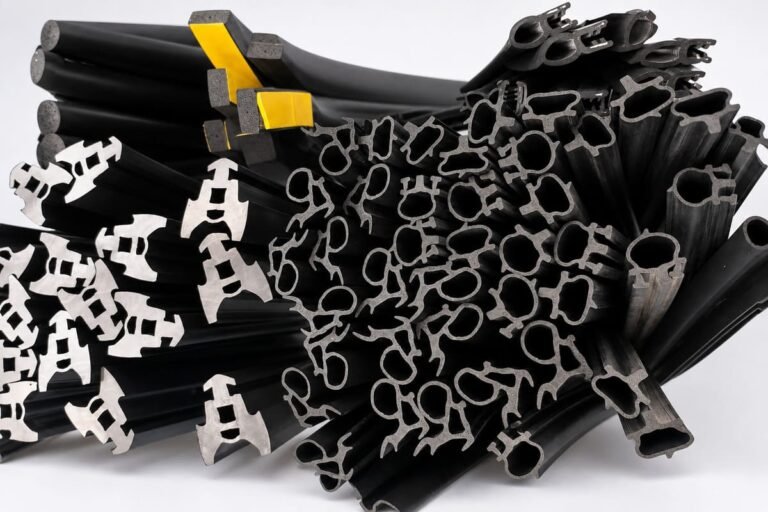
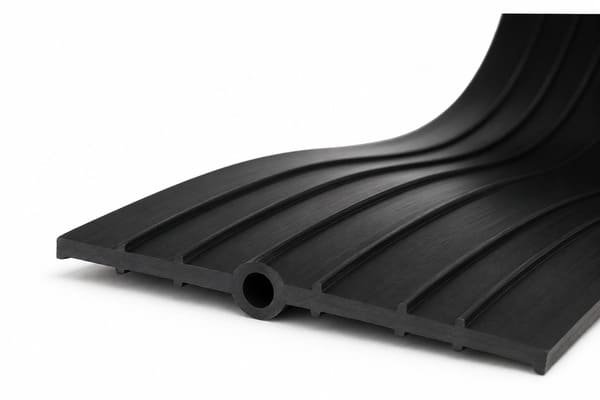
Each rubber waterstop forms a continuous barrier across a construction joint, expansion joint, or other designed joint area. Continuous longitudinal ribs improve anchorage within the surrounding concrete and create an extended path against water migration. Center-bulb, hollow-center, and tubular-center profiles can accommodate a degree of movement or deformation when correctly matched to the joint design. Multi-cavity sections are also available for specified structural requirements. The flexible profiles can be installed horizontally or vertically and supplied in customized lengths. Listed width options are 80, 100, 110, and 120 mm. Material options include SBR, neoprene rubber, natural rubber, and EPDM. Final specifications must be confirmed for each project.
Key Features
- Flexible waterproofing profile embedded across concrete joints
- Flat ribbed, center-bulb, tubular-center, and multi-cavity structures available
- Continuous longitudinal ribs improve anchorage within surrounding concrete
- Hollow-center configurations provide a deformation zone for compatible joint designs
- Suitable for horizontal or vertical installation
- Available widths of 80, 100, 110, and 120 mm
- SBR, neoprene rubber, natural rubber, and EPDM material options
- Width, thickness, length, cross-section, material, and packaging can be customized
Size / Dimensions
| Dimension Item | Specification |
|---|---|
| Width | 80 / 100 / 110 / 120 mm |
| Thickness | 9mm |
| Length | Customized |
| Cross-Section | Customized |
| Dimensional Tolerances | To be confirmed |
Product Specifications
| Specification | Details |
|---|---|
| Product Name | Rubber Waterstop |
| Material | SBR, neoprene rubber, natural rubber, or EPDM |
| Hardness | Available upon request |
| Color | Black |
| Profile Types | Flat ribbed, center-bulb, tubular-center, and multi-cavity profiles |
| Working Temperature | -40 to 120°C |
| Tensile Strength | ≥22 MPa |
| Elongation at Break | 400% |
| Density | 1.1–1.3 Mg/m³ |
| Manufacturing Process | Available upon request |
| Application | Water control in concrete construction joints, expansion joints, and other designed joint areas |
| Customization | OEM / ODM; customized width, thickness, length, cross-section, material, and packaging |
| MOQ | 1000 m |
| Tooling | Available upon request |
| Sample Availability | Available upon request |
| Lead Time | 30days |
| Compliance Options | Available upon request |
Applications
Rubber waterstops are used in water-retaining and water-excluding concrete structures. Typical installation locations include construction joints, expansion joints, basements, underground structures, tunnels, culverts, reservoirs, water tanks, dams, canals, bridges, sewage-treatment facilities, and water-management structures. The profile is positioned across the joint before concrete placement so that its ribbed sections become embedded in the adjoining concrete. Installation may be horizontal or vertical according to the structural arrangement. The required profile type depends on whether the joint is fixed or expected to move. Water pressure, reinforcement clearance, concrete placement, joint geometry, connection layout, and environmental exposure must be evaluated before selecting the final waterstop.
Material and Performance Considerations
SBR, neoprene rubber, natural rubber, and EPDM are available material options, but they are not interchangeable in every environment. Compound selection should be based on the contact medium, operating temperature, environmental exposure, expected joint movement, water pressure, and required service life. The listed working temperature, tensile strength, elongation, and density must be confirmed for the selected compound and finished profile before production. Shore A hardness also requires project-specific confirmation. Chemical compatibility and long-term performance cannot be determined from the polymer name alone. Provide complete operating conditions so that the material, hardness, cross-section, and validation requirements can be reviewed together.
Customization and Manufacturing
Rubber waterstops can be customized using a 2D drawing, 3D model, physical sample, or complete cross-sectional specification. Adjustable details include width, thickness, length, wing geometry, anchoring ribs, center bulb, tubular section, longitudinal cavities, edge profile, rubber compound, Shore A hardness, dimensional tolerances, and packaging. Flexible profiles can be evaluated for coiled supply or cutting to specified lengths. The required arrangement of straight sections, corners, T-junctions, and cross-junctions should be identified before production. Tooling feasibility depends on the approved cross-section and tolerances. Prototype sections may be evaluated before mass production to confirm dimensions, profile continuity, surface condition, installation fit, and connection requirements.
Quality and Sourcing Considerations
Before ordering, confirm the waterstop profile, dimensions, tolerances, rubber compound, Shore A hardness, required length, quantity, joint type, water pressure, movement conditions, installation method, and applicable project standards. Inspection requirements may cover width, thickness, center-section geometry, rib dimensions, cavity dimensions, surface condition, profile continuity, deformation, cuts, voids, and batch consistency. Connection and installation procedures should be agreed because damaged sections, misalignment, inadequate support, unsuitable joints, or incomplete concrete consolidation can reduce water-control performance. Packaging and storage requirements should prevent deformation, contamination, punctures, sharp-object damage, and unsuitable environmental exposure before the profiles are installed.
Information Required for a Quote
- 2D drawing, 3D model, or physical sample
- Complete dimensions and tolerances
- Rubber material and Shore A hardness
- Operating temperature
- Contact media
- Water pressure and expected joint movement
- Joint type and installation method
- Required straight lengths, coils, corners, and intersections
- Required quantity and estimated annual volume
- Inspection and compliance requirements
- Packaging requirements
Frequently Asked Questions
What is a rubber waterstop used for?
A rubber waterstop is embedded across a concrete joint to form a continuous barrier against water migration. It can be used in water-retaining or water-excluding structures. Actual performance depends on the selected profile, rubber compound, joint design, connection integrity, concrete placement, and installation quality.
Which rubber waterstop structures are available?
Available configurations include flat ribbed profiles, center-bulb profiles, tubular-center profiles, and special multi-cavity sections. The appropriate structure depends on the joint type, expected movement, water pressure, installation space, reinforcement arrangement, and project requirements. A cross-sectional specification should be approved before production.
Which width options are listed?
The listed standard width options are 80, 100, 110, and 120 mm. Thickness, length, and cross-sectional details can be customized. Dimensional tolerances must be confirmed according to the selected profile, tooling arrangement, installation requirements, and applicable project specification.
How should the rubber material be selected?
Available material options include SBR, neoprene rubber, natural rubber, and EPDM. Selection should consider the contact medium, temperature, water pressure, expected movement, environmental exposure, and required service life. The selected compound and finished profile should be validated against the actual project conditions.
What is the purpose of a center bulb or hollow section?
A center bulb or hollow-center section creates a defined flexible zone between the embedded sides of the waterstop. It can accommodate a degree of deformation in a compatible joint design. Allowable movement and water-pressure performance must be confirmed through the selected profile specification and applicable validation requirements.
What are the MOQ, tooling, and sample requirements?
The listed MOQ is 100 m. Tooling requirements, sample availability, and lead time are available upon request. These details depend on the selected cross-section, dimensions, rubber compound, hardness, tolerances, connection components, inspection requirements, packaging, and total order quantity.
Request Product Evaluation
Provide the required cross-section, dimensions, tolerances, rubber compound, hardness, joint type, water pressure, expected movement, contact environment, installation arrangement, required lengths, and order quantity. A 2D drawing, 3D model, physical sample, or complete project specification will support profile selection, tooling evaluation, sample preparation, and quotation.