Product Overview
Reliable custom rubber parts for industrial applications
Quick Answer
Automotive rubber intake hoses connect air intake components, help maintain airflow sealing, and absorb engine vibration, movement, and installation tolerance.
Automotive Rubber Intake Hose — Precision Molded Air Ducts & Engine Intake Pipes for OEM and Aftermarket Supply
Product Overview
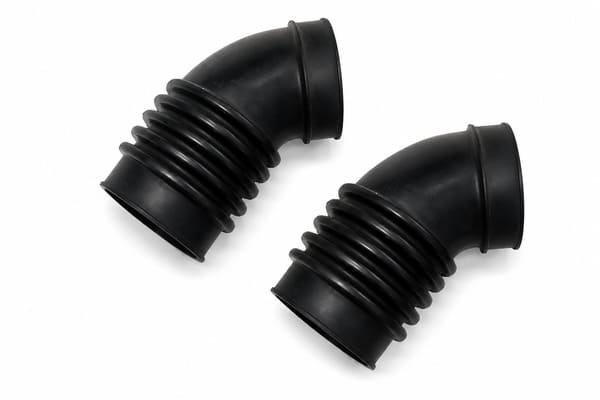
Automotive rubber intake hoses are flexible air connection components used in vehicle air intake systems. They connect air filters, throttle bodies, intake pipes, turbo inlet sections, sensors, and other engine air system parts while helping maintain sealing and stable airflow.
The intake hose must handle engine vibration, installation tolerance, temperature changes, and repeated movement during vehicle operation. A properly designed rubber intake hose helps prevent air leakage, supports smooth assembly, and protects the intake system from dust entry through connection gaps.
What Are Automotive Rubber Intake Hoses?
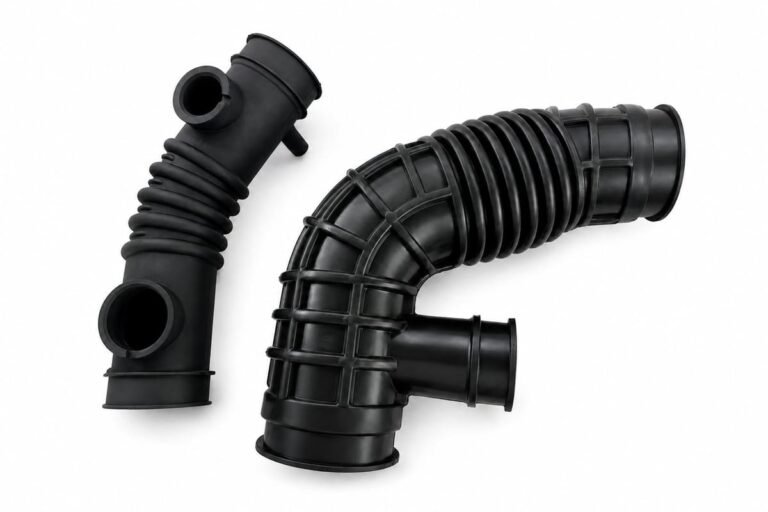
Automotive rubber intake hoses are molded or formed rubber components used to transfer filtered air into the engine intake system. They may be straight, curved, corrugated, stepped, or branched depending on the vehicle layout and connection requirements.
Because the engine compartment is exposed to heat, vibration, ozone, oil mist, and pressure changes, the hose material and structure must be selected carefully. The design should match air flow direction, clamp sealing areas, wall thickness, flexibility, and nearby component clearance.
Key Technical Specifications
| Parameter | Value / Range |
|---|---|
| Materials | EPDM, Silicone (VMQ), NBR, CR (Neoprene), CSM, ACM, ECO |
| Reinforcement | 1-ply to 4-ply polyester/aramid fabric; steel helix wire optional |
| Hardness | 50–75 Shore A |
| Operating Temperature | -40°C to +150°C (EPDM); -65°C to +230°C (Silicone) |
| Boost Pressure Rating | Up to 2.5 bar (standard); 3.5 bar+ (4-ply reinforced) |
| Wall Thickness | 4 mm to 10 mm (application dependent) |
| Inside Diameter | 20 mm to 200 mm+ |
| Shape | Straight, elbow (45°/90°/135°), S-bend, Z-shape, molded complex geometry |
| End Configuration | Plain cut, bead-rolled, flanged, sensor port (MAP/MAF/BOV) integrated |
| Surface Finish | Smooth bore (standard); corrugated/convoluted for flexibility zones |
| Standards | ASTM D2000 / SAE J200; IATF 16949 capable |
| Compliance | RoHS, REACH; material data sheets and PPAP available |
| MOQ | 100 pcs (standard molds); |
Types of Automotive Rubber Intake Hose
Naturally Aspirated Air Intake Duct Hose
Connects the air filter housing to the throttle body on naturally aspirated (NA) gasoline and diesel engines. Typically a molded EPDM or CR single-ply hose with a flexible corrugated mid-section to accommodate engine movement and vibration. Often includes integrated MAF sensor ports and resonator connections.
Turbocharger Inlet Hose (Cold Side Intake)
Routes ambient air from the air filter to the turbocharger compressor inlet. Operates at negative pressure (vacuum) during acceleration, requiring hose wall stiffness to resist collapse. Typically molded EPDM or reinforced rubber with internal wire helix or fabric reinforcement.
Turbocharger Outlet / Charge Air Hose (Hot Side)
Transfers hot compressed air from the turbocharger outlet to the intercooler inlet. Exposed to high temperature and positive boost pressure simultaneously — requires silicone (VMQ) or high-ACM rubber with multi-ply reinforcement to handle temperatures up to +200°C.
Intercooler Outlet Hose (Cold Side Boost Pipe)
Routes cooled, compressed air from the intercooler outlet to the throttle body or intake manifold. Operates at boost pressure with lower temperatures — premium EPDM or 4-ply reinforced silicone ensures pressure containment.
Blow-Off Valve (BOV) Hose
Short hose sections connecting the BOV/recirculation valve to the charge air circuit. Must withstand rapid pressure transients from turbo boost spikes and BOV actuation cycling.
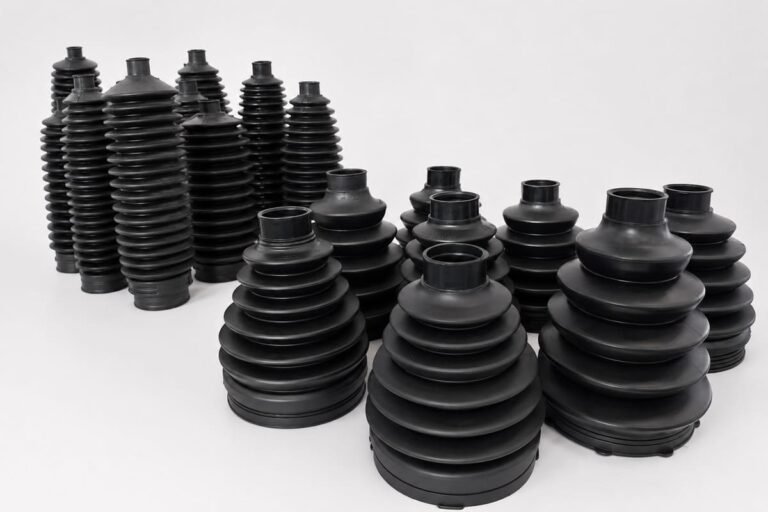
Flexible Corrugated Intake Boot
Short, highly flexible convoluted rubber sections — often between the air filter housing outlet and the MAF sensor or between the throttle body and intake manifold — designed to absorb engine vibration and thermal movement without transmitting stress to sensor connections.
Product Types
Straight Rubber Intake Hose
Used for simple air duct connections where both ends are aligned. This type is common for air filter outlets, intake pipe joints, and general connection sections.
Curved Rubber Intake Hose
Designed to fit compact engine compartments where the air path requires bends or offset connections. The bend radius and wall thickness should be matched to avoid collapse or airflow restriction.
Corrugated Intake Hose
Used where flexibility and vibration absorption are important. The corrugated section helps compensate for engine movement, installation tolerance, and thermal expansion.
Stepped or Reducer Intake Hose
Used to connect two different pipe diameters. This structure is common between air cleaner boxes, sensors, throttle bodies, and intake tubes.
Branched Intake Hose
Includes additional ports for breather lines, sensors, or auxiliary air connections. Port position and sealing design should match the vehicle assembly.
Material Selection Guide
| Material | Temp. Range | Key Properties | Best Application |
|---|---|---|---|
| EPDM | -40°C to +150°C | Ozone/UV resistant, cost-effective, steam compatible | NA intake ducts, cold-side boost pipes |
| Silicone (VMQ) | -65°C to +230°C | Extreme heat, maintains flexibility, premium finish | Hot-side turbo hoses, intercooler outlets |
| CR (Neoprene) | -40°C to +120°C | Oil-mist tolerant, ozone resistant, good flex fatigue | General intake ducts, engine bay environments |
| NBR (Nitrile) | -30°C to +110°C | Oil and fuel resistant | Diesel intake ducts near fuel injection systems |
| ACM (Acrylic) | -30°C to +180°C | Heat and oil resistant, engine bay thermal soaking | High-heat zones near engine block |
| CSM (Hypalon) | -40°C to +120°C | Excellent ozone, UV, chemical resistance | Exposed outdoor intake routing, commercial vehicles |
Reinforcement Options
The structural performance of an intake hose under boost pressure and vacuum is determined by its reinforcement architecture:
- 1-ply polyester — standard naturally aspirated intake ducts, vacuum/low-pressure applications
- 2-ply polyester — moderate boost applications up to 1.5 bar, intercooler pipes
- 3-ply / 4-ply polyester or aramid — high-boost performance and commercial vehicle turbo systems; rated to 2.5–3.5 bar+
- Steel wire helix — internal anti-collapse reinforcement for hoses under sustained vacuum (turbo inlet, suction side)
- Aramid (Kevlar) braid — lightweight, maximum burst strength for motorsport and extreme boost applications
Industries & Vehicle Applications
Julong Rubber intake hoses serve the full spectrum of automotive powertrain platforms:
- Passenger cars — naturally aspirated and turbocharged gasoline/diesel engines; OEM and aftermarket replacement
- SUVs & crossovers — large-bore intake ducts for higher displacement turbocharged engines
- Light commercial vehicles & vans — heavy-duty diesel intake air systems with extended service intervals
- Trucks & buses — large-bore reinforced intake and charge air hoses for high-output diesel powertrains
- Off-road & 4×4 vehicles — snorkel intake hoses, raised air intake systems, water-fording-rated intake components
- Agricultural & construction machinery — engine intake ducting for tractors, excavators, and generator sets
- Motorsport — ultra-high-boost silicone hose systems for rally, track, and drag racing applications
- Marine — engine room intake air ducting on inboard marine diesel and petrol engines
Performance Benefits
Specifying quality rubber intake hoses prevents a cascade of costly failures:
- Airtight sealing — prevents unmetered air entering downstream of the MAF sensor, eliminating lean running, rough idle, and ECU fault codes
- Vacuum collapse resistance — reinforced walls and wire helix prevent hose kinking or collapsing under turbo inlet suction
- Boost pressure containment — multi-ply construction holds boost without ballooning or blowout at intercooler joints
- Engine vibration isolation — flexible corrugated zones decouple engine movement from airbox and sensor connections, preventing fatigue cracking
- Heat resistance — silicone and ACM compounds resist thermal degradation in high-temperature engine bay locations
- Long service life — ozone and UV-resistant compounds prevent surface cracking on externally routed intake ducting
Customization Capabilities
Julong Rubber engineers intake hoses to exact OEM or aftermarket specifications:
- 3D geometry — complex molded bends (45°/90°/135°/S-shape/Z-shape) matched to engine bay packaging constraints
- Bore sizes — ID from 20 mm to 200 mm+; multi-diameter hoses with reducer sections
- Sensor port integration — MAF, MAP, BOV, blow-off, and breather port bosses molded in-place or cut and bonded
- End bead profile — OE-matched bead rolls, flanged ends, or plain ends for hose clamp fitment
- Reinforcement specification — 1 to 4-ply polyester/aramid; wire helix on request
- Compound selection — EPDM, silicone, NBR, CR, ACM, CSM; hardness and compression set optimized per duty
- Color — black standard; blue, red, grey silicone for performance aftermarket
- Compliance documentation — PPAP, IMDS, RoHS, REACH, material data sheets on request
Why Source from Julong Rubber?
✅ English-speaking technical sales — RFQ response within 24 hours
✅ IATF 16949 capable — automotive OEM quality system, PPAP documentation available
✅ ISO 9001:2015 certified manufacturing and inspection
✅ In-house tooling — complex 3D molded hose tooling, 7–20 day lead time
✅ Full material range — EPDM, Silicone, NBR, CR, ACM, CSM compounded in-house
✅ Multi-ply reinforcement capability — up to 4-ply polyester/aramid; wire helix available
✅ OEM drawing matching — reverse engineering from sample or CAD file
✅ Low MOQ — 100 pcs for standard aftermarket; program-based volumes for OEM
✅ 25+ years automotive rubber component supply to European and global markets
How to Order / Request a Quote
To prepare an accurate quotation, please provide the drawing, 3D file, sample, or main installation dimensions of the automotive rubber intake hose. Important dimensions include inner diameter, total length, bend angle, wall thickness, clamp area size, port position, and connection end structure.
Please also confirm the vehicle model or engine type if available, working temperature, oil mist exposure, airflow or vacuum condition, quantity, packaging requirement, and target delivery schedule.
FAQ
▼ Can you produce automotive rubber intake hoses based on our sample or drawing?
Yes. Custom intake hoses can be produced according to drawings, 3D files, physical samples, vehicle models, or actual installation dimensions.
▼ Which material is suitable for automotive intake hoses?
The material depends on heat, ozone, oil mist, and flexibility requirements. EPDM, NBR, CR, silicone, and reinforced rubber structures can be reviewed according to the application.
▼ Can the hose include bends, corrugations, or branch ports?
Yes. The hose can be customized with curved sections, corrugated zones, reducer ends, clamp grooves, and branch ports for sensors or breather lines.
▼ Can the hose be reinforced to prevent collapse?
Yes. Fabric reinforcement or adjusted wall thickness can be used when the hose needs better strength, vacuum resistance, or dimensional stability.
Request a Custom Quote
If you need automotive rubber intake hoses for air intake sealing, engine connection, or vibration compensation, you can send the drawing, sample, or installation details for review. The material, structure, and production method can then be matched to the actual engine and vehicle application.