Product Overview
Reliable custom rubber parts for industrial applications
Quick Answer
Automotive rubber bellows and protective boots are flexible molded components used to cover joints, connectors, cables and moving assemblies. Available structures include straight, tapered, elbow-shaped and flange-mounted boots. Dimensions, rubber compounds, Shore A hardness, corrugated profiles and mounting interfaces can be customized according to the vehicle component and application conditions.
Product Overview
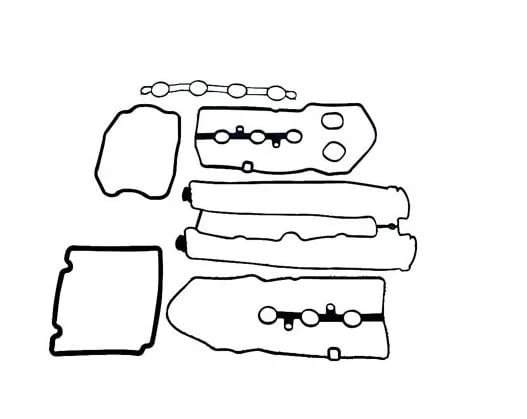
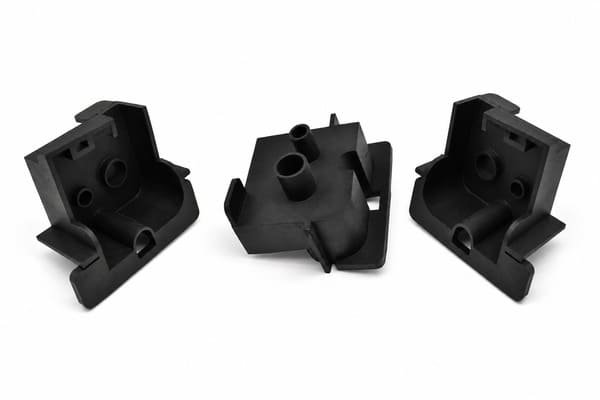
Automotive rubber bellows and protective boots are molded components designed to protect vehicle assemblies while allowing controlled movement. The product image shows several structures, including straight bellows, elbow-shaped boots, tapered covers, flexible sleeves and flange-mounted protective boots. Corrugated sections provide flexibility during extension, compression or angular movement. End openings, stepped interfaces, sealing lips and mounting flanges can be designed to match the mating parts. These components are commonly used where dust, dirt, water splash or external contaminants must be reduced around a joint or connection. The exact rubber compound, dimensions, wall thickness and hardness should be selected according to temperature, media exposure, movement range and installation method.
Key Features
- Flexible corrugated sections allow extension, compression and angular movement.
- Multiple structures are available, including straight, tapered, elbow-shaped and flange-mounted boots.
- Black molded rubber construction for automotive component protection.
- End openings, stepped diameters, sealing lips and mounting interfaces can be customized.
- Suitable for reducing exposure to dust, dirt, water splash and external contaminants.
- Custom rubber compounds can be reviewed according to temperature and media exposure.
- Shore A hardness, wall thickness and dimensional tolerance are available upon request.
- Prototype development can be evaluated from a 2D drawing, 3D model or physical sample.
Product Specifications
| Specification | Details |
|---|---|
| Product Name | Automotive Rubber Bellows and Protective Boots |
| Material | Rubber material selection depends on the application conditions |
| Hardness | Available upon request |
| Color | Black |
| Manufacturing Process | Rubber molding |
| Application | Automotive joints, connectors, cables and moving assemblies |
| Customization | Dimensions, rubber material, Shore A hardness, color, wall thickness, corrugated structure, end openings, flange design, sealing lips, dimensional tolerance and packaging can be reviewed according to the application requirements. |
| MOQ | Contact us for details |
| Tooling | Tooling cost depends on the drawing and product structure |
| Sample Availability | Available upon request |
| Lead Time | 30-35days |
| Compliance Options | Available upon request |
Applications
Automotive rubber bellows and protective boots can be used around vehicle joints, shafts, cables, connectors, linkage assemblies and other components that require a flexible protective cover. Corrugated sections allow the boot to move with the assembly while helping reduce exposure to dust, dirt, water splash and external contaminants. Elbow-shaped boots can be evaluated where the installation path changes direction. Tapered or stepped boots can match components with different connection diameters. Flange-mounted designs can be reviewed where the protective boot must attach to a housing or panel. The final structure should be confirmed against the actual movement range and installation space.
Customization Options
Custom automotive rubber bellows and protective boots can be developed from a 2D drawing, 3D model or physical sample. Buyers can specify the overall length, end diameters, wall thickness, number of convolutions, flange dimensions, sealing-lip structure, movement range, rubber material, Shore A hardness, color and dimensional tolerance. Material selection depends on the operating temperature, oil or grease exposure, ozone, weather conditions and contact media. For an accurate quotation, please provide the installation position, mating-part dimensions, expected movement, environmental conditions, required quantity and estimated annual volume. Tooling cost depends on the drawing and product structure.
What Information Should Buyers Provide for a Quote?
- Product drawing or physical sample
- Dimensions and tolerances
- Rubber material
- Shore A hardness
- Operating temperature
- Contact media
- Application environment
- Required movement range
- Installation method
- Required quantity
- Estimated annual volume
- Compliance requirements
- Packaging requirements
FAQ
What are automotive rubber bellows and protective boots used for?
Automotive rubber bellows and protective boots are flexible covers used around joints, cables, connectors and moving assemblies. Their purpose is to help reduce exposure to dust, dirt, water splash and external contaminants while allowing the protected component to move during vehicle operation.
Can the dimensions and structure be customized?
Yes. The overall length, end diameters, wall thickness, number of convolutions, flange structure, sealing lips and mounting interfaces can be reviewed according to your drawing or sample. Custom geometry should match the installation space and required movement range.
How should buyers select the rubber material?
Material selection depends on the application conditions. Buyers should provide the operating temperature, contact with oil or grease, ozone exposure, outdoor environment, movement frequency and required flexibility. The rubber compound should be selected according to the actual installation conditions.
Can elbow-shaped and tapered protective boots be manufactured?
Yes. Elbow-shaped, tapered, stepped, straight and flange-mounted structures can be evaluated. The final design depends on the connection diameters, installation direction, movement range and available space around the protected component.
Are prototype samples available?
Prototype sample availability depends on the product structure, rubber material, tooling requirements and quantity. Please send a 2D drawing, 3D model or physical sample for technical review. A sample plan can be confirmed after the dimensions and application conditions are checked.
Is tooling required for a custom automotive rubber boot?
Tooling requirements depend on the boot geometry, dimensions, corrugated structure, flange design and rubber material. Existing tooling can be reviewed first. For a new design, tooling cost depends on the drawing and product structure.
Request a Custom Quote
Send your 2D drawing, 3D model or physical sample for a technical review of your automotive rubber bellows and protective boots. Please include the dimensions, mating-part interfaces, rubber requirements, movement range, operating temperature, contact media, required quantity and estimated annual demand.